QCKLY
An on-demand delivery app for Qatar — from small parcels to furniture.
QCKLY lets people request delivery of almost anything, from small parcels to large furniture, in one app. I designed it from scratch as the company's core Product Designer. It was built for a real client but never released, so it's shown here as a concept.
QCKLY was designed as a first-of-its-kind delivery app for the Qatar market, built around what residents there need most:
- Convenience. Busy residents can order a wide range of items, from small parcels to furniture, with ease.
- Time-saving. No trips to physical stores — especially valuable given traffic and long distances in Qatar.
- Accessibility for a diverse population. Access to goods that fit different cultural and lifestyle preferences.
- Efficiency and speed. Fast delivery for urgent needs and the region's fast-paced lifestyle.
- Adapted to the climate. Essentials arrive without anyone having to go out in extreme weather.
As the company's core Product Designer, I set up the whole design process and mentored the more junior designers.
- Designed the cross-platform app from scratch, including a complete UI kit with distinctive illustrations, icons, and reusable elements.
- Built several information-architecture iterations in MindNode to find the best UX for the final product.
- Ran UX and visual research to create a distinctive, recognisable design that guides people efficiently from A to B — and tested design solutions with A/B testing, which gave the company valuable insights.
- Worked closely with the CEO and key stakeholders to define hypotheses for testing and feed the findings back into the app.
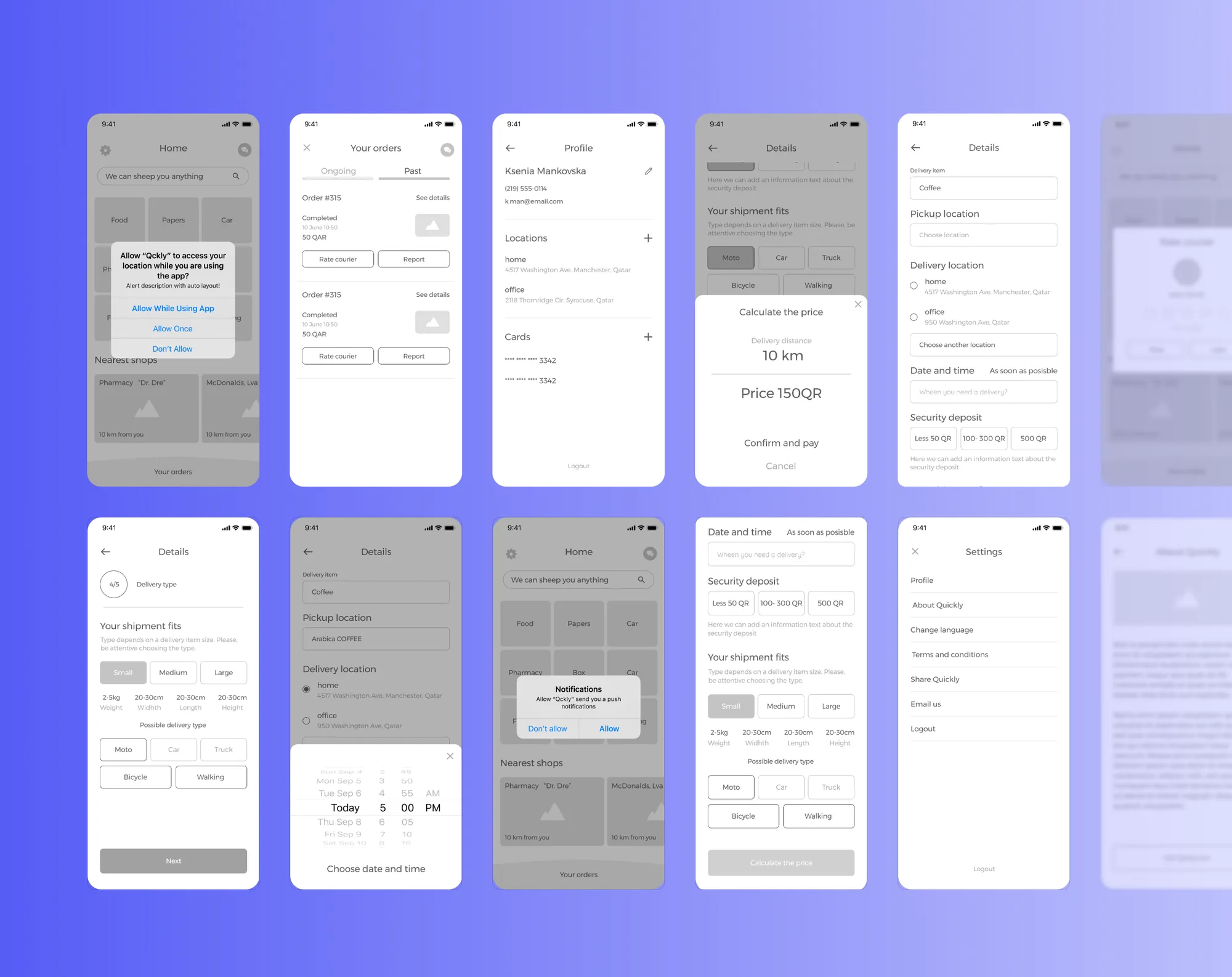
The wireframes worked out how one app could handle very different deliveries — shipment type and size, pickup and drop-off locations, date and time, a security deposit, and the price — before any visual design.
- Choose a distinct colour to make a statement — green was chosen as the primary colour to set QCKLY apart from ordinary delivery services.
- Bring a variety of delivery methods, parcel types, and sizes together in a single app.
- Make the visual design completely distinct from the existing competition in Qatar.
- Humanise the interface with illustrations and unique icons.
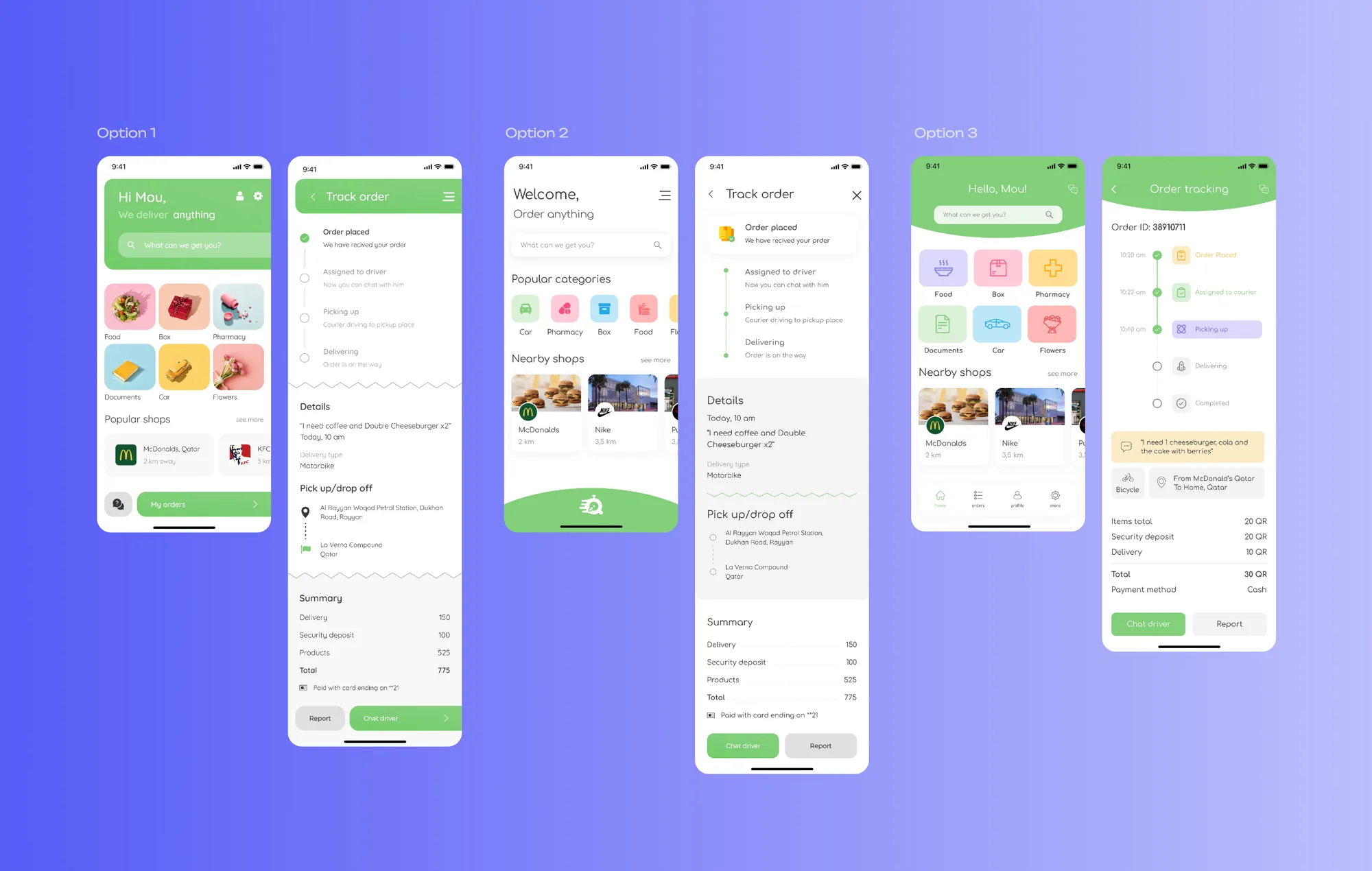
Three visual directions explored the home screen and order tracking.
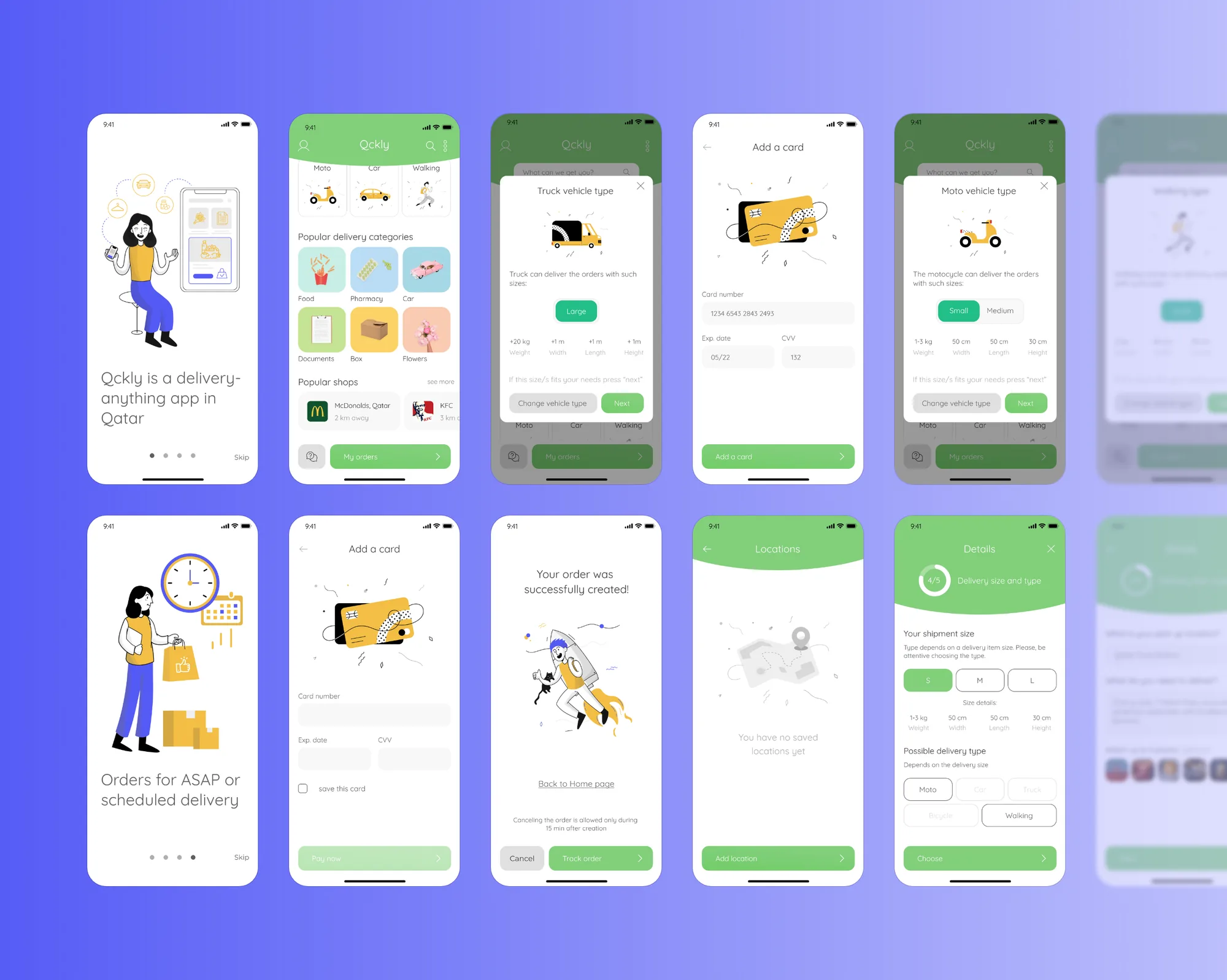
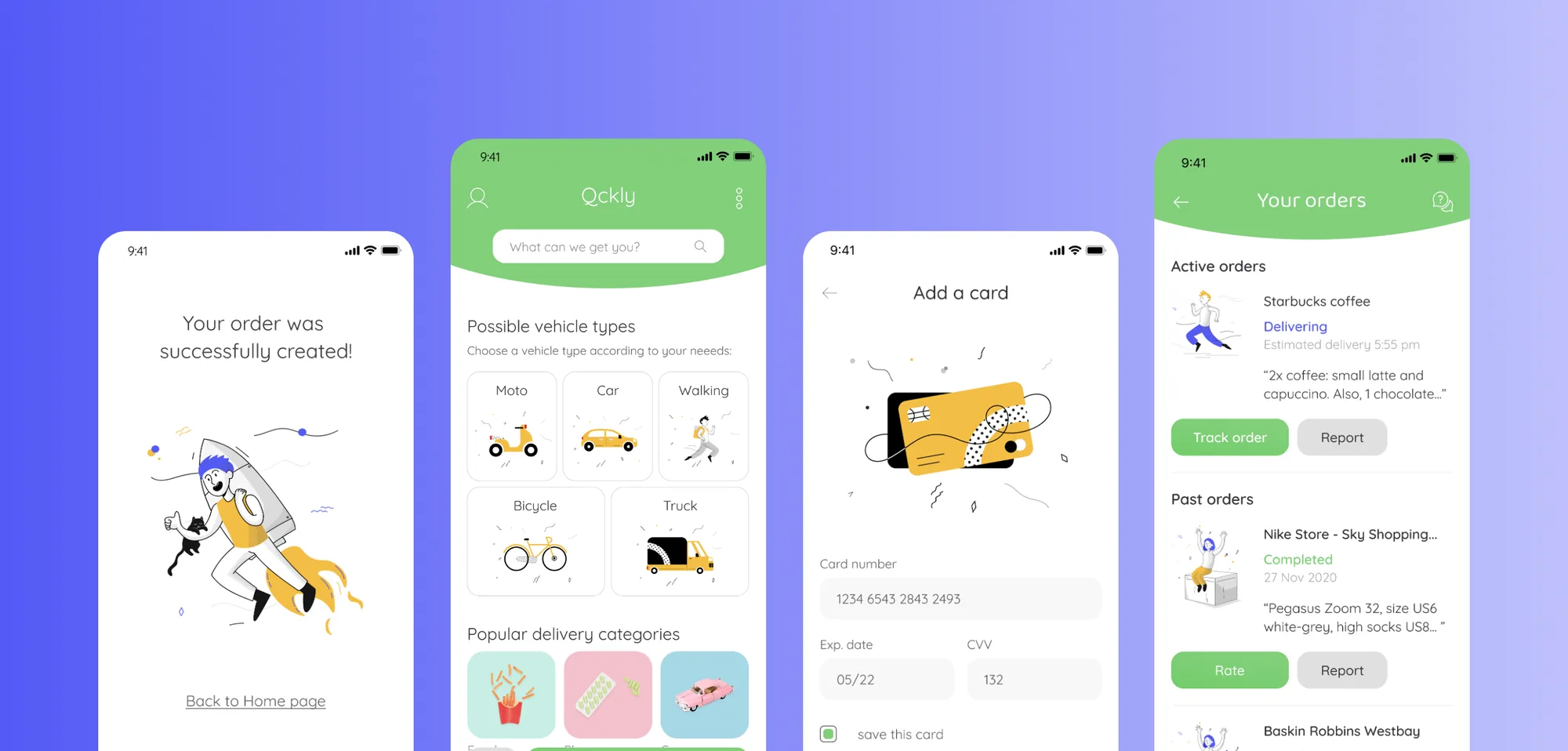
The final design ran to 60+ screens — onboarding, choosing a vehicle type and delivery category, payment, order confirmation, and delivery details.